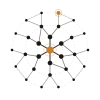
One project memory. Every desk hands off to the next.
A research project is not one tool. It is an idea that becomes a proposal, a search that becomes a library, a dataset that becomes a chapter, and a draft that leaves with its declaration. These are the workflows, shown on the real screens.
Trust and adoption of digital payments among first-time users in rural India.
Draft chapter 2 in APA 7. Cite only from my library.
Your idea and your papers feed the Gap Finder, its outline feeds the review, and the review's library feeds the Writing Studio with a one-line instruction.
Why one project memory?
One project memory
Your idea, your papers, the library, the data and the drafts live in one project. Every desk reads from it and writes back to it.
Nothing typed twice
The Gap Finder hands its keywords to the search, the search hands its library to the studio, the worksheet hands its tables to Results.
Start at any stage
Looking for a gap, reviewing, analysing or writing: open the desk that matches and the others are one click away when you need them.
The record follows the draft
Citations come from your library, results from your run, and the AI Use Declaration from the ledger. The paper and its evidence stay together.
Five workflows, on the real screens.
Each one plays through the desks in the order a project meets them. Pick one, or scroll.
From an idea to a proposal.
Research Gap Finder to Literature Review
From the literature to a chapter.
Literature Review to Writing Studio
| Group | N | Mean | SD |
|---|---|---|---|
| Female | 200 | 3.88 | 0.58 |
| Male | 212 | 3.41 | 0.62 |
From data to results.
Data Analysis to Writing Studio
| Category | Words | Share |
|---|---|---|
| Typed in the studio by the author | 6,420 | 78.4% |
| AI-suggested completions, accepted by the author | 740 | 9.0% |
| AI-drafted (retained) | 330 | 4.0% |
| AI-revised (retained) | 250 | 3.1% |
| External AI output, declared by the author | 0 | 0.0% |
| Moved from the author's earlier drafts (verified) | 40 | 0.5% |
| Quoted from cited sources (verified) | 410 | 5.0% |
| Pasted from outside the platform, origin unverified | 0 | 0.0% |
| AI-assisted, total | 1,320 | 16.1% |
From a draft to a declared paper.
Writing Studio to AI Use Declaration
The supervisor's workflow.
Supervisor Desk
From an idea to a proposal.
A sentence goes in. The Gap Finder reads the field, types the gaps, decides the design and writes the proposal, and its keywords seed the literature search.
From the literature to a chapter.
One search across every database becomes a library, the library becomes a review drafted to PRISMA, and the Writing Studio cites from that library and nothing else.
From data to results.
The worksheet runs the tests your methodology chapter promised, and what it produces lands in the project's Results for the chapter to cite.
| id | gender | age | trust_mean | adopted |
|---|---|---|---|---|
| R001 | Female | 34 | 4.2 | Yes |
| R002 | Male | 27 | 3.6 | No |
| R003 | Female | 41 | 4.8 | Yes |
From a draft to a declared paper.
Every word in the studio carries where it came from, so the AI Use Declaration is added up from the record rather than remembered at submission.
The supervisor's workflow.
The same project memory, read from the other side of the desk: the cohort sorted by attention, drafts shared on the scholar's terms, and a report written from the ledger.
What a project is made of.
Three kinds of node. Inputs are yours, desks do the work, records stay with the paper.
Inputs
What you bring. Each one is the first node of a workflow and nothing more is asked of you to start.
- An idea in a sentence
- Your own PDFs and a saved library
- A dataset: CSV, Excel, SPSS, Stata or R
- Chapters you have already written
Desks
Where the work happens. Each desk takes what the previous one produced and shows you what it did with it.
- Research Gap Finder
- Literature Review
- Writing Studio
- Data Analysis
- Supervisor Desk
Records
What stays with the project and travels with the paper: the parts an examiner, a journal or a department will ask for.
- The library, deduplicated, DOIs verified
- Results: tables, figures and the read-out
- The provenance ledger, word by word
- The signed AI Use Declaration
Frequently asked questions
Do I have to start at the beginning?
No. Pick the stage you are at and that desk opens first. A scholar with a finished proposal starts at the literature search; one with data in hand starts at the worksheet. Everything a desk needs from an earlier stage can be added later or imported.
Can I bring in work I did elsewhere?
Yes. Upload your PDFs to the library, import chapters you have already written, and drop your dataset on the worksheet. Imported and pasted text is marked with its origin unverified until you declare it, so the declaration stays honest.
Does a pack cover a whole workflow?
A pack opens one desk in full for 30 days, which covers the workflows that live on that desk. A plan opens every desk, so a workflow that crosses desks, like the literature to the chapter, runs end to end on Starter, Pro or Elite.
Where does the hand-off happen?
In the project. The Gap Finder writes its keywords and seed papers into the project, the search saves into the project's library, the worksheet saves into the project's Results, and the Writing Studio reads all of it. Nothing is exported and re-uploaded between desks.
Build the research flow that works for you.
Try every desk for 3 days. Start at the stage you are at, and the next desk is already set up when you get there.
Packs open one desk for 30 days. Plans open every desk.